
Contact us by email here
24-hour reception / Answer: Weekdays 9:00AM - 5:00PM
Contact us by email here
24-hour reception / Answer: Weekdays 9:00AM - 5:00PM
Welfare equipment development project column
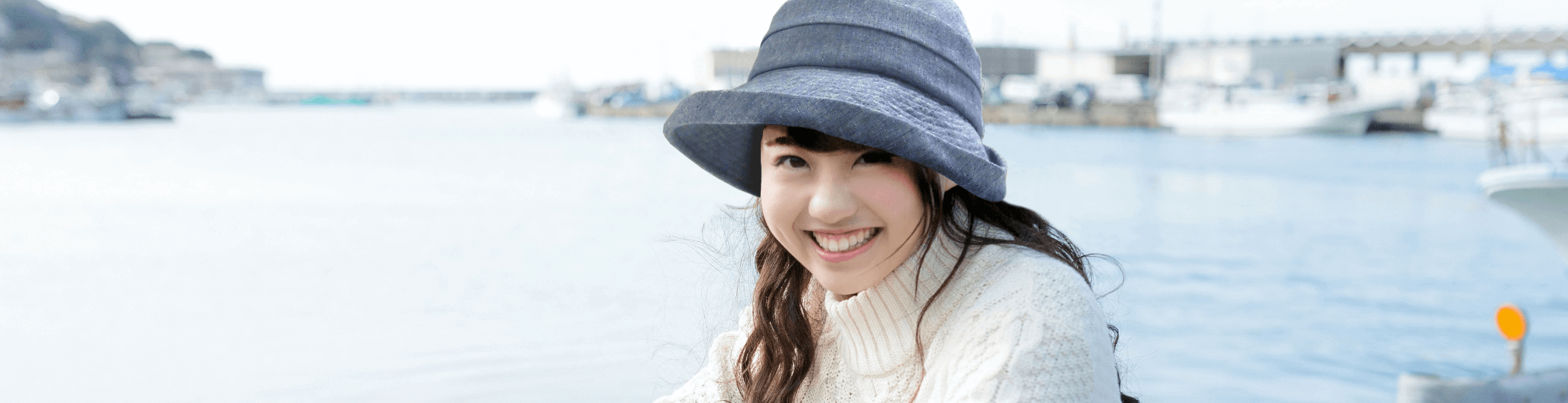
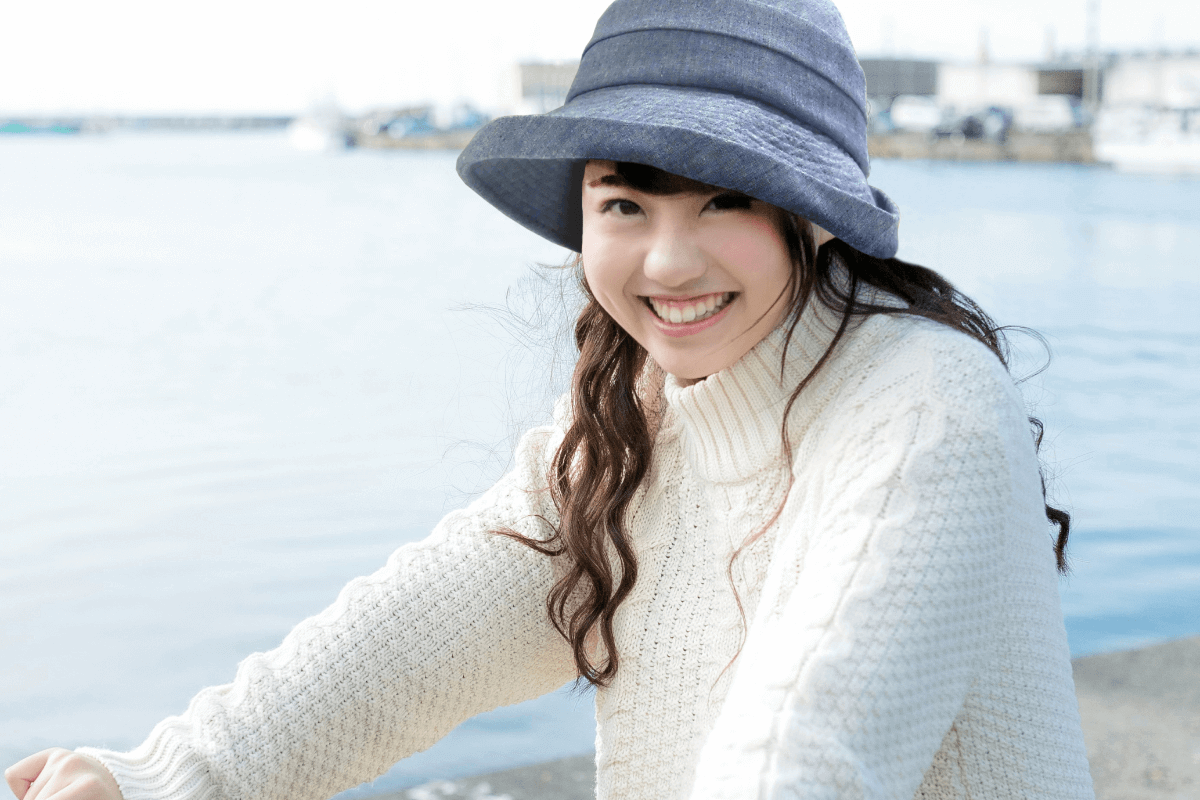
HOME / List of columns on welfare equipment development projects / Head Guard Fit When you get sick, that's when you should think about the safety of your everyday life.
Head Guard Fit
table of contents
* Influenza season
* When you get sick, your "usual life" changes.
* During recovery, focus on safety in your daily life.
* Measures to prevent falls and preparations for "what if" scenarios
* The option of protecting your head
Influenza season
During flu season, we become more conscious of measures to prevent the spread of infection, such as washing our hands, gargling, ventilating, and wearing masks.
Especially when an elderly person falls ill, their family members may try to support them by keeping an eye on any changes in their condition and ensuring they can rest as much as possible.
When we get sick, our focus inevitably shifts to "getting better quickly."
Of course, treatment and rest are important.
On the other hand, there is one more thing I would like to consider. That is,
"Will I be able to continue living my normal life safely while I'm recovering?"
That's the point.
When you get sick, your "usual life" changes.
When you're not feeling well, even simple actions that you normally do without thinking can become difficult to perform as you'd like.
I get out of bed.
I walked to the toilet.
I stood up from the chair.
To eat.
Even these everyday activities can feel more burdensome than usual when you have a fever or feel fatigued.
Additionally, waking up at different times than usual or spending more time lying down can change your daily rhythm.
Even when family members are providing care, their daily routines change, such as checking on the patient at different times than usual or bringing meals. In short, illness changes not only the patient's "usual day" but also the family's.
That's why it's important not only to look at the illness itself, but also to consider "how the person is spending their time while recovering."
During recovery, it's especially important to focus on safety in your daily life.
During recovery, it's important to rest your body as much as possible.
At the same time, since your lifestyle will be different from usual, it might be a good idea to take a look at your surroundings.
For example, check if there are any objects placed around the bed.
When you go to the toilet at night, is it dark around your feet?
Do the chairs and furniture you normally use have something to grab onto when you stand up?
Things that didn't bother you when you were feeling well can become a burden when you're feeling unwell.
What's important is not to do anything special,
"Is the current situation a safe environment for people to live in?"
The idea is to re-examine your everyday life from this perspective.
Measures to prevent falls and preparations for "what if" scenarios
One of the things that elderly people need to be particularly careful about in their daily lives is falling.
Creating an environment that prevents falls is important, such as installing handrails, keeping the floor clear of objects, and ensuring adequate lighting around your feet.
However, no matter how well-prepared the environment is, it's impossible to completely eliminate the possibility of falling.
Therefore, what we should consider is,
"Measures to prevent falling" and "Preparations in case you do fall"
The key is to consider them separately.
Preventing falls is, of course, important.
Even so, is there anything we can do to mitigate the impact on the head in the event of a fall?
Having that perspective is one way to prepare for living a secure life.
Not just when you're sick.
As we age, our walking speed may change, and our footing may become less stable.
Furthermore, you may start to feel a little uneasy about actions that you previously performed without any problems. The important thing is,
Instead of thinking, "It's been fine so far, so it will be fine in the future," it's about re-evaluating your lifestyle to suit your current circumstances.
And it's about taking what you need, when you need it.
There are various tools that support daily life, such as handrails and canes.
Among them,**A "head protection helmet" to protect the head.**That's another option.
The option of protecting your head
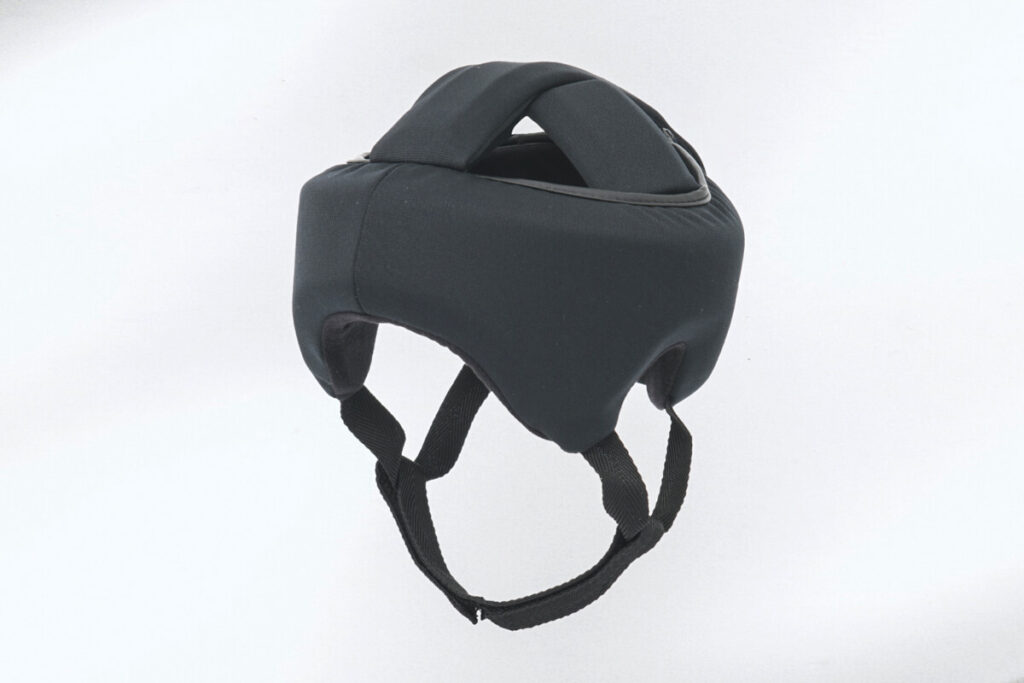
When people hear the term "head protection helmet," they might imagine it as something only special people use.
However, head protection helmets are assistive devices designed to protect the heads of people who are at risk of suffering a severe blow to the head due to falls or other incidents.
Create an environment that prevents falls. And, in the event of an accident, protect your head.
Rather than choosing one option over the other, it's important to consider what preparations are possible based on the individual's circumstances and lifestyle.
Illness prompts us to re-evaluate our daily lives.
In that context, we should consider not only "what can I do to avoid falling?" but also "what can I do to protect my head in case of an accident?"
A head protection helmet is one option for continuing to live your daily life with peace of mind.
From here on, we will introduce head protection helmets that are easy to incorporate into everyday life.
[Recommended for people like this ①]
・For those looking for a head protection helmet that is easy to use indoors
・Those who prefer a simple design without a brim
・Those who are concerned about head injuries in the event of an accident such as a fall.
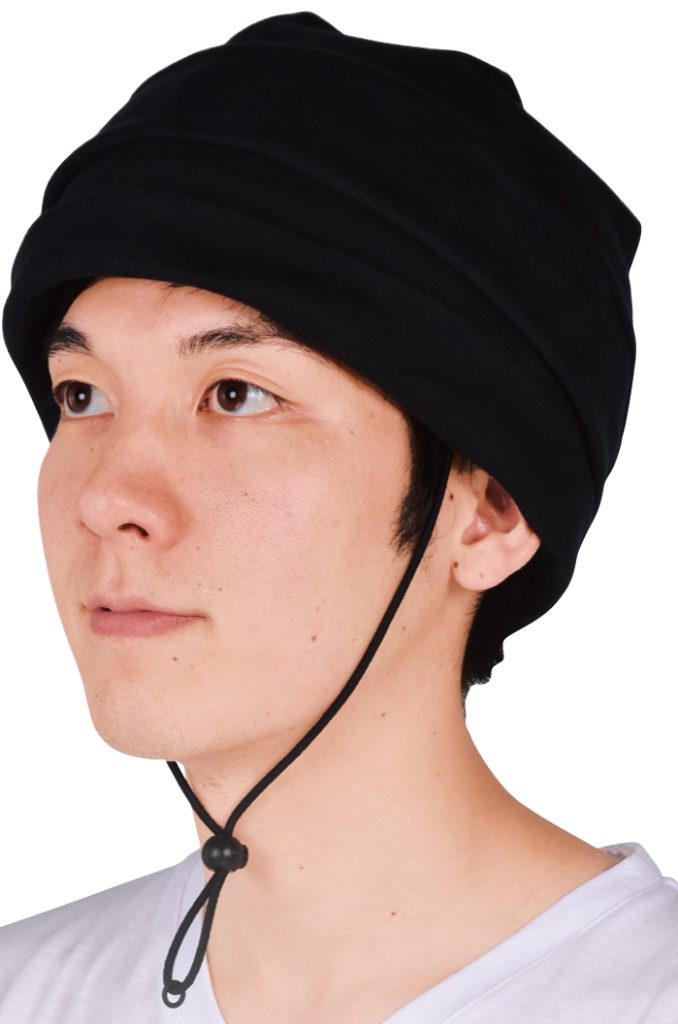
KM-1000R
Head Guard for Outings® Charlotte type
[Product details]
• Material: Outer fabric/cotton100%, Lining/Polyester100%
·size:M(55~57cm)、L(58~60cm)
• Colors: Black, Gray, Pink
Weight: Approx.160g
Washing: Hand washable
·price :9,680Yen (tax included)
[Recommended for people like this ②]
・For those looking for a head protection helmet that can be used both indoors and outdoors
・For those who want to choose something lightweight and soft to wear.
・For those who want to incorporate it naturally as a hat
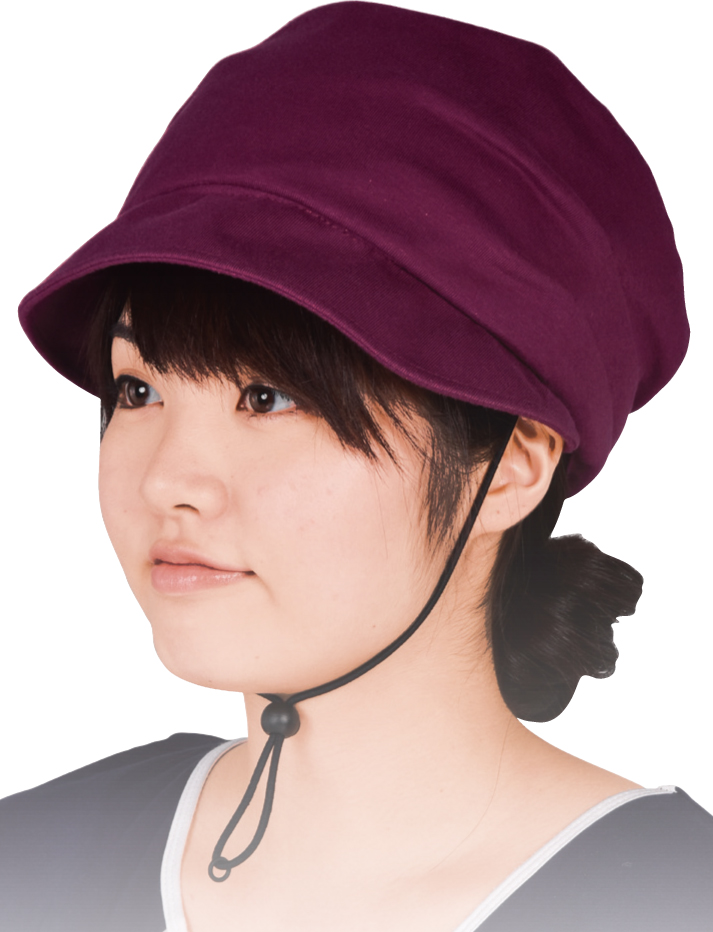 KM-1000F
Head Guard for Outings® Knit brim type
[Product details]
• Material: Outer fabric/cotton100%, Lining/Polyester100%
·size:S(53~55cm)、M(55~57cm)
• Colors: Beige, Wine, Gray, Mocha
Weight: Approx.110g
Washing: Hand washable
·price :9,350Yen (tax included)
[Recommended for people like this ③]
・For those who want to protect their head in particular, and also want a stylish design.
・Those who want to avoid something that looks like a typical protective helmet.
・For those who want to cherish their own individuality, especially since it's something they wear.
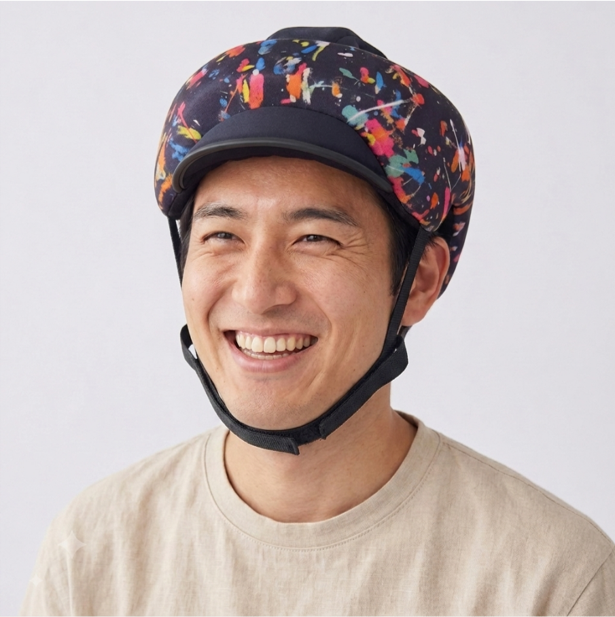
Design headguard
[Product details]
• Material: Outer fabric and lining/Polyester100%
·size:L-LL(53~63cm)
Color: Black
Weight: Approx.145g(Including the brim)
• Shock-absorbing material:EVAmaterial(2Layers and thickness20mm)
Washing: Hand washable
·price :25,000Yen (tax-exempt)
Click here for product details and to purchase the designer headguard.
Useful Content
Head Guard for Outings
Useful Content
Useful Content

Useful Content
Useful Content
Head Guard for Outings
-8-scaled-e1747642875820-1024x786.jpeg)
Head Guard for Outings
Useful Content
Useful Content